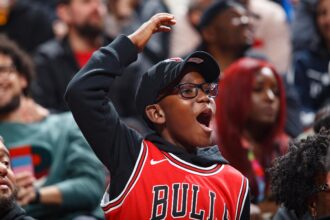
The New York Knicks faced another humbling setback on Wednesday night, falling decisively to the Houston Rockets as their ongoing struggles against winning teams showed no signs of improvement. Despite flashes of effort, the Knicks were unable to overcome a determined Rockets squad, underscoring persistent issues that have plagued New York throughout the season. This latest loss deepens questions about the Knicks’ ability to compete consistently at a high level and puts additional pressure on the team as they seek to find answers moving forward.
Knicks Falter in Houston as Offensive Inconsistencies Persist
Once again, the Knicks were unable to find a consistent rhythm on offense, a problem that has haunted them throughout the season. Despite flashes of brilliance from key players, the team’s inability to string together extended scoring runs allowed the Rockets to control the pace and dictate the flow of the game. Knicks veterans and young talent alike struggled to make open shots, with turnovers and missed opportunities further halting any momentum. Houston capitalized on these lapses, maintaining pressure defensively and exploiting mismatches at crucial junctures.
Key Factors in Knicks’ Offensive Struggles:
- Low shooting efficiency, especially from beyond the arc
- Frequent turnovers leading to easy fast-break points for Houston
- Lack of cohesive ball movement, resulting in stagnant offensive sets
- Difficulty in closing out possessions in the paint
| Category | Knicks | Rockets |
|---|---|---|
| Field Goal % | 39.2% | 47.8% |
| Turnovers | 18 | 10 |
| Points in Paint | 32 | 48 |
| 3PT Made | 6 | 11 |
Defensive Breakdown Exposes Gaps Against Tougher Opponents
Facing a relentless Rockets offense, the Knicks’ defensive frailties were laid bare once again. Key rotation players struggled to contain drives to the basket, while perimeter defenders were repeatedly exploited by sharp three-point shooters. The Rockets capitalized on every mismatch, exposing the Knicks’ lack of communication and slow rotations that allowed for uncontested shots and easy transition points. These defensive lapses highlight the ongoing challenge New York faces in closing out games against playoff-caliber opponents.
Critical breakdowns included:
- Inconsistent help defense leading to frequent breakdowns in the paint.
- Repeated failure to box out, resulting in numerous offensive rebounds.
- Guarding mismatches poorly against speedy perimeter scorers.
| Category | Knicks | Rockets |
|---|---|---|
| Points Allowed in Paint | 58 | 72 |
| Second Chance Points | 12 | 18 |
| 3P% Allowed | 42% | 47% |
Strategic Adjustments Needed to Reverse Downward Spiral
The Knicks’ inability to compete consistently against top-tier teams has exposed glaring weaknesses in both their offensive schemes and defensive rotations. Coaching staff must rethink their approach, emphasizing ball movement to create higher-quality shots rather than relying heavily on isolation plays. Defensively, there’s a pressing need to tighten perimeter coverage and communicate better, particularly in transition situations where the Rockets exploited gaps repeatedly. Without these shifts, the team risks further entrenchment in their current slump.
Beyond on-court tactics, a renewed focus on player roles and minutes distribution appears crucial. Younger players must be integrated more dynamically, providing energy and unpredictability to the lineup, while veterans take on mentorship roles that foster cohesion. The following table outlines potential focus areas for immediate improvement:
| Area | Current Problem | Suggested Adjustment |
|---|---|---|
| Offense | Overreliance on isolation plays | Increase pick-and-roll and ball movement |
| Defense | Slow rotations, poor perimeter defense | Enhance communication and switch more effectively |
| Player Roles | Inconsistent minutes and unclear roles | Define rotations, develop bench depth |
- Establish a more cohesive offensive identity through structured plays.
- Prioritize defensive discipline to limit opponents’ easy baskets.
- Utilize young talent to inject vitality and adaptability into lineups.
The Knicks’ inability to compete consistently against top-tier teams has exposed glaring weaknesses in both their offensive schemes and defensive rotations. Coaching staff must rethink their approach, emphasizing ball movement to create higher-quality shots rather than relying heavily on isolation plays. Defensively, there’s a pressing need to tighten perimeter coverage and communicate better, particularly in transition situations where the Rockets exploited gaps repeatedly. Without these shifts, the team risks further entrenchment in their current slump.
Beyond on-court tactics, a renewed focus on player roles and minutes distribution appears crucial. Younger players must be integrated more dynamically, providing energy and unpredictability to the lineup, while veterans take on mentorship roles that foster cohesion. The following table outlines potential focus areas for immediate improvement:
| Area | Current Problem | Suggested Adjustment |
|---|---|---|
| Offense | Overreliance on isolation plays | Increase pick-and-roll and ball movement |
| Defense | Slow rotations, poor perimeter defense | Enhance communication and switch more effectively |
| Player Roles | Inconsistent minutes and unclear roles | Define rotations, develop bench depth |
- Establish a more cohesive offensive identity through structured plays.
- Prioritize defensive discipline to limit opponents’ easy baskets.
- Utilize young talent to inject vitality and adaptability into lineups.
In Retrospect
As the Knicks fall once again to a victory-starved Rockets squad, questions surrounding their ability to compete against quality opposition remain pressing. With the losing streak against winning teams continuing, New York faces mounting pressure to address the shortcomings exposed on the court if they hope to turn their season around. Fans and analysts alike will be watching closely to see whether adjustments can be made before their window for playoff contention closes.