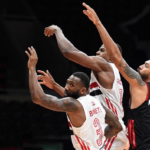

In a tightly contested Game 6 showdown, the Orlando Magic fell short against the Detroit Pistons, dashing their hopes of extending the series. Despite a valiant effort, key moments and pivotal performances shaped the outcome, leaving the Magic to reflect on what went wrong as the season nears its conclusion. Here, we break down the top five storylines from Orlando’s tough loss, highlighting the critical factors that defined the game.
Orlando Magic’s Defensive Struggles Exposed in Crucial Game Six
Orlando’s defense, which had been a question mark throughout the season, failed to hold up when it mattered most. Detroit capitalized on every lapse, exploiting mismatches and finding open shots with alarming frequency. The Magic, who had prided themselves on perimeter defense, struggled to contain shooters from beyond the arc, allowing the Pistons to drain multiple crucial three-pointers that shifted the momentum. Additionally, weak rotations and missed assignments led to numerous easy baskets in the paint, underscoring the team’s lack of communication and urgency on the defensive end.
Defensive breakdowns were particularly evident in the second and fourth quarters, where Detroit went on decisive scoring runs. Below is a quick snapshot of Orlando’s defensive shortcomings during these periods:
| Quarter | Points Allowed | Opponent 3PTFG% | Fast Break Points Allowed |
|---|---|---|---|
| 2nd | 32 | 50% | 8 |
| 4th | 29 | 45% | 10 |
The data highlights how lapses in defensive intensity and transition defense compounded the Magic’s problems, ultimately sealing their fate. For Orlando to advance, significant adjustments on that side of the floor will be paramount moving forward.
Key Player Performances That Shaped the Outcome Against Detroit
Orlando’s young core struggled to find consistency, with Paolo Banchero battling foul trouble that limited his explosiveness on both ends. Despite this, Banchero contributed a valiant effort with 22 points and 9 rebounds but was unable to carry the team through the Pistons’ aggressive defensive schemes. Meanwhile, Franz Wagner showed flashes of brilliance, knocking down timely three-pointers and facilitating the offense, finishing with 18 points and 6 assists, yet his impact was overshadowed by key turnovers in critical moments.
Detroit’s balanced attack proved to be the difference-maker, led by Jaden Ivey who posted a game-high 24 points, relentlessly attacking the rim and drawing fouls that disrupted Orlando’s defensive setups. Supporting him, Caleb Houstan surprised many with a breakout 15-point effort that stretched the floor effectively. The following table breaks down the key contributions from both teams’ top performers:
| Player | Points | Rebounds | Assists | Turnovers |
|---|---|---|---|---|
| Paolo Banchero (ORL) | 22 | 9 | 4 | 3 |
| Franz Wagner (ORL) | 18 | 5 | 6 | 4 |
| Jaden Ivey (DET) | 24 | 4 | 5 | 2 |
| Caleb Houstan (DET) | 15 | 3 | 2 | 1 |
- Turnover Differential: Orlando’s 14 turnovers versus Detroit’s 9 became a significant factor.
- Bench Production: Detroit’s reserves outscored Orlando’s bench by double digits, providing critical momentum shifts.Turnover Differential: Orlando’s 14 turnovers versus Detroit’s 9 became a significant factor.
- Bench Production: Detroit’s reserves outscored Orlando’s bench by double digits, providing critical momentum shifts.
- Defensive Pressure: Detroit’s aggressive on-ball defense led to multiple disrupted plays and forced Orlando into hurried decisions.
- Clutch Performance: Jaden Ivey’s late-game drives and free throws helped seal the victory for the Pistons.
Let me know if you’d like me to help with anything else!
Strategic Adjustments Needed to Avoid Similar Losses in Future Matchups
Orlando Magic’s recent setback illuminated critical areas where strategic recalibration is imperative. Defensively, the team must emphasize tighter perimeter containment to disrupt Detroit’s sharpshooters, whose open looks drastically influenced the scoreboard. Increasing physicality on the boards and enhancing communication to prevent easy second-chance points will also be crucial elements moving forward. Incorporating versatile defensive assignments that adapt seamlessly to offensive shifts should become a staple in practice sessions.
Offensively, the Magic need to diversify their scoring options beyond their primary ball handlers. Introducing a more dynamic motion offense can create better spacing and exploit mismatches, counteracting Detroit’s defensive pressure. The coaching staff should encourage increased aggressiveness in attacking the rim while balancing it with a higher volume of effective kick-out passes to capitalize on open three-point attempts. Below is a breakdown of suggested focus areas to address before upcoming clashes:
| Area | Current Issue | Proposed Adjustment |
|---|---|---|
| Perimeter Defense | Susceptible to catch-and-shoot | Hedge screens aggressively and close out faster |
| Rebounding | Allowing second-chance points | Crash boards with better box-out fundamentals |
| Offensive Diversity | Overreliance on isolation plays | Implement more pick-and-roll and cutting actions |
| Ball Movement | Low assist rate | Encourage quick passes and off-ball movement |
To Wrap It Up
As the Orlando Magic reflect on their Game 6 defeat to the Detroit Pistons, several key storylines emerge that will shape the franchise’s offseason priorities. From missed opportunities on offense to defensive lapses, the team’s performance underscores the challenges ahead as they aim to build a more consistent and competitive roster. With the series concluded, attention now turns to how the Magic will address these issues moving forward, seeking to learn from their shortcomings and lay the foundation for future success in the NBA.