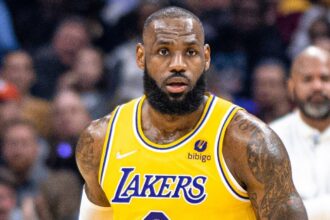


Golden State Warriors forward Draymond Green recently responded to comments made by head coach Steve Kerr regarding Green’s potential future in coaching. In an interview with NBC Sports Bay Area & California, Green addressed Kerr’s remarks, shedding light on his ambitions beyond his playing career. As discussions about the Warriors’ leadership and legacy continue, Green’s candid reflections offer new insight into the evolving dynamic between the veteran player and the coaching staff.
Draymond Green Responds to Steve Kerr’s Comments on Coaching Prospects
Draymond Green recently addressed remarks made by Golden State Warriors head coach Steve Kerr regarding his potential future in coaching. Kerr had voiced some skepticism about Green’s readiness to take on a head coaching role, emphasizing the challenges that come with the transition from player to coach. Green, known for his fiery leadership on the court, responded with a mixture of respect and determination, highlighting his ongoing commitment to learning and growth. “I’m not worried about others’ timelines. I’m focused on getting better every day, on and off the court,” Green stated, underscoring his readiness to embrace the responsibilities coaching demands whenever the opportunity arises.
During the discussion, Green elaborated on the qualities he believes are essential for a successful coaching career, including communication, adaptability, and emotional intelligence. He also shared insights into how his playing experience informs his approach, outlining a few key areas where he feels he already excels:
- Leadership: Leading teammates through adversity and success.
- Game Strategy: A deep understanding of in-game adjustments.
- Player Development: Mentoring younger players within the team.
| Area | Current Strength | Focus for Growth |
|---|---|---|
| Communication | Clear and direct on-court direction | Off-court team management |
| Strategy | In-depth play understanding | Pre-game tactical planning |
| Motivation | Engaging teammates | Handling diverse personalities |
Analyzing the Dynamics Between Green and Kerr in Warriors’ Leadership
Draymond Green and Steve Kerr have long been pillars of the Golden State Warriors’ success, but recent exchanges hint at a more complex dynamic beneath the surface. In addressing Kerr’s public questioning of his potential coaching future, Green revealed a candid perspective on leadership and expectations within the franchise. The veteran forward emphasized that while Kerr’s probing might seem challenging, it ultimately fosters growth and accountability among the team’s core. This interaction underscores a deeper effort to ensure the Warriors’ competitiveness remains unshaken amid evolving roles and organizational ambitions.
Analyzing the nuances of their relationship reveals several key elements driving their leadership interplay:
- Mutual respect: Despite occasional tensions, both recognize and value each other’s contributions to the team’s culture.
- Accountability culture: Kerr’s strategic questioning pushes players like Green to reflect and adapt continuously.
- Shared vision: A common goal to sustain championship-caliber performance fuels their ongoing dialogue and collaboration.
| Aspect | Green’s Perspective | Kerr’s Approach | |||||||||||||||
|---|---|---|---|---|---|---|---|---|---|---|---|---|---|---|---|---|---|
| Leadership Style | Direct, vocal on the court | Strategic, reflective | |||||||||||||||
| Conflict Handling | Open confrontation | Constructive questioning | |||||||||||||||
|
Draymond Green and Steve Kerr have long been pillars of the Golden State Warriors’ success, but recent exchanges hint at a more complex dynamic beneath the surface. In addressing Kerr’s public questioning of his potential coaching future, Green revealed a candid perspective on leadership and expectations within the franchise. The veteran forward emphasized that while Kerr’s probing might seem challenging, it ultimately fosters growth and accountability among the team’s core. This interaction underscores a deeper effort to ensure the Warriors’ competitiveness remains unshaken amid evolving roles and organizational ambitions. Analyzing the nuances of their relationship reveals several key elements driving their leadership interplay:
|